
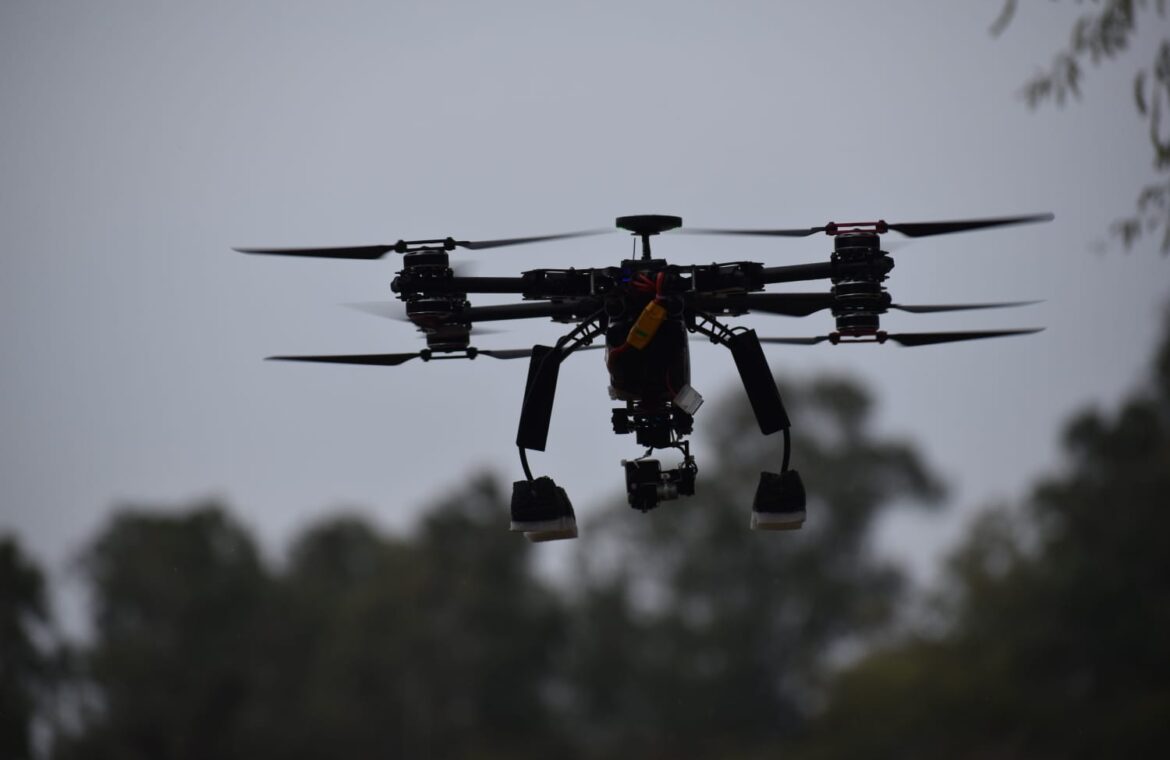
Drone Systems
At Zen Kinematics 8 Systems Private Limited, our drone systems represent a cornerstone of our technological innovation. Drones have transformed from niche gadgets into essential tools for industries, governments, and organizations globally, offering unparalleled capabilities in aerial surveillance, data collection, and automation. Our focus on cutting-edge drone technologies has made us a leader in this field, providing comprehensive solutions across various sectors.
Key Features of Our Drone Systems
Autonomous Flight Capabilities
Our drones are equipped with advanced autonomy features, enabling them to perform tasks with minimal human intervention. This allows businesses to deploy drones for routine or dangerous tasks, reducing human risk and increasing operational efficiency.AI-Driven Analytics
We integrate artificial intelligence into our drones, enabling them to analyze data in real-time. AI enhances their ability to make decisions autonomously, such as identifying objects, classifying terrain, and predicting outcomes. These intelligent systems make our drones smarter, faster, and more effective.- Modular Design
Our drones feature modular designs that allow for easy customization and upgrades. Whether it’s changing sensors or adding payloads, clients can configure drones based on specific mission requirements. This flexibility makes them adaptable to a wide range of applications. - Durability and Robustness
Built with rugged materials and precision engineering, our drones are designed to withstand harsh environmental conditions. Whether flying over arid deserts, dense forests, or urban landscapes, our systems maintain high performance. - Long Endurance and Range
Our drone systems boast long endurance capabilities, allowing for extended flight times and long-range missions. This makes them ideal for sectors such as agriculture, where they may need to cover large tracts of land, or for security and defense applications that require persistent surveillance. - Advanced Navigation and GPS Integration
Equipped with state-of-the-art GPS and navigation systems, our drones can operate with pinpoint accuracy. They can follow precise flight paths, hover in place for extended periods, and return to base autonomously in the event of a signal loss or low battery.
Frequently Asked Questions
A drone system refers to an unmanned aerial vehicle (UAV) combined with its associated technology, including sensors, cameras, GPS, and control systems, that allow it to perform various tasks autonomously or remotely. Drone systems are used in industries such as agriculture, defense, construction, and logistics for tasks like aerial surveillance, data collection, mapping, and inspections.
There are several types of drones, each designed for specific applications:
- Fixed-Wing Drones: These drones have wings like an airplane and are ideal for long-range missions with high endurance.
- Multi-Rotor Drones: These are the most common type of drone, with four or more rotors. They are versatile and widely used for short-range tasks like inspections, surveillance, and photography.
- Single-Rotor Drones: These drones have a single rotor like a helicopter and are typically used for heavier payloads and more complex operations.
- Hybrid Drones: Combining characteristics of both fixed-wing and multi-rotor drones, these are designed for both endurance and vertical takeoff/landing.
Drones are used across a wide variety of industries:
- Agriculture: For precision farming, crop monitoring, and spraying.
- Defense and Security: For surveillance, reconnaissance, and tactical operations.
- Construction and Infrastructure: For site surveying, project monitoring, and inspections.
- Logistics: For package delivery and supply chain monitoring.
- Environmental Monitoring: For tracking wildlife, managing natural resources, and assessing environmental changes.
- Disaster Management: For search and rescue, damage assessment, and relief operations.
- Increased Efficiency: Drones can automate tasks that traditionally require significant time and human resources, such as surveying land or inspecting infrastructure.
- Cost Savings: Drones reduce the need for expensive manual labor or equipment, particularly in high-risk or remote areas.
- Improved Safety: Drones can perform dangerous tasks, such as inspecting hazardous structures or entering disaster zones, without putting human workers at risk.
- Real-Time Data Collection: Drones collect and process data in real time, enabling faster decision-making and more accurate assessments.
- Access to Hard-to-Reach Areas: Drones can easily reach locations that are inaccessible to humans, such as remote landscapes, high altitudes, or confined spaces.